“We see the world not as it is, but as we are” Albert Einstein
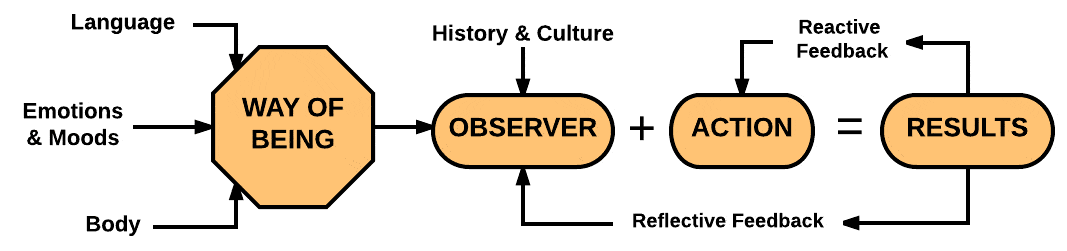
Albert Einstein is referring to our Way of Being in the world. It observes and interprets the results we want and the actions to deliver it. The actions reflect our predspositions and beliefs that are held in our body, the language we use, the emotions we display and the mood we adopt.
The Observer-Action-Result Model explains how our Way of Being determines the result we look for and the actions we can imagine to achieve it.

The world doesn’t have any problems as such. It has no conscience or intention. It exists only to serve its existence. We, the observers, have issues with making sense of what we see.
You may not even notice what I perceive as a problem. This is because we all have different concerns and truths, which means we make different distinctions from the same facts and beliefs. When the result is not what we expected, improving the action may not satisfy us.
Different observers will see various possibilities generated by other thoughts and produce different outcomes. For example, even though the oversight was corrected, if we requested tea with sugar that was absent when we drank it, you may still doubt that the person could not be relied upon to deliver what was expected next time.
Results must resolve concerns.
People with bad intentions often have different thoughts and concerns from us. We look to others to reframe our thoughts. If they don’t, we blame them for our blindness instead of reviewing our beliefs. If we pause to understand how we look at things, we might have to accept that “our” way of seeing them could be wrong, even given our innate capacity to see alternative perspectives.
For example, we may experience concern when we are unhappy about our behaviour or feelings. It may be tempting to blame something or someone beyond our control, but our thoughts shape our feelings, limiting our actions and ability to achieve results.
But these thoughts are driven by habits embedded in feelings and the values we are blind to. When we can observe them, we can see how to change them and reveal other possible actions that we have seen before.
When we seek clarity to resolve a concern, it is wise to reframe our thinking and check our beliefs to see if the intention could be seen differently to change the action.
Breakdowns in the flow of action
O-A-R is critical thinking practice for any situation that needs a solution. In most concerns, the need is to fix the problem or break down the flow of activity. For example, when we worry about missing a deadline.
Review the results we have not produced and realise we had options but didn’t stop considering them. Perhaps we were under pressure, in a bad mood, making assumptions, so we didn’t check things out, etc. We are all unique observers, so where we stand and how we see things matters to achieve what’s expected.
The talk by Matthew Syed in the video below explains how success relies on us pausing to see how we defend what we know or feel instead of being open to questioning our assumptions and the way we notice our actions and the world around us.
If our way of being is defensive, our thinking remains fixed, and our actions are repeated until we get the same results. The strategy of a Hedgehog.
As the observer of a situation, we know that we should question our assumptions and beliefs because that is how we gain a deeper awareness of the actions that are and are not acceptable to us. For example, we might:
Check out our assessments to see if they are “grounded” on verifiable facts
Revisit our expectations of the person or situation to review our beliefs
Question the beliefs we hold that are shaping our assessment
Consider our responsibilities in that situation or for the person involved
Review previous experience and the impact of similar assessments made before
Assessing if the actions we are considering will meet the desired result
So, what does it mean?
Say you are concerned about dealing with a difficult child (result). You may decide initially to chastise them (first reaction). But on reviewing your beliefs, you have seen that chastising the child hasn’t worked from experience (our observer). You may now prefer to distract them with a game (a reframed action) to show how behaving differently could get what you want (the outcome).
What we are doing is . . . . . .
Giving ourselves permission to act and teach self-leadership through personal experience.
Gaining a better understanding of who we are and how we can recommit to meet a challenge.
Reflecting on how we interpret our observations and make new distinctions about what beliefs change our perceptions, we can achieve a better result.
Discovering what gets in the way of learning and shifting the old ways of seeing, being and doing.
Understanding that your beliefs drive your actions and find the result you want.
Now, what can you do?
Allocate 20-minute chunks over the next five days to work through this exercise.
Choose a concern about your behaviour that’s stopping you from progressing.
What beliefs are holding you back? How might different beliefs enable you to act differently?
Now, practice a new action that confronts your beliefs and gives you the freedom to act.
How effective was it on a scale of 1 to 10 (10 being a big impact)? How did it feel?
What did you learn that you would do differently next time to improve your score?
Where else in your life could the lessons you have learned be applied?
What are you concerned about now? Repeat the seven steps if you want to embed the skill.


